Treat Sciatica, Slip Discs & Nerve Pain Without Rush.
Stable spine pain patterns may improve without surgery when symptoms, exam, and timing fit.
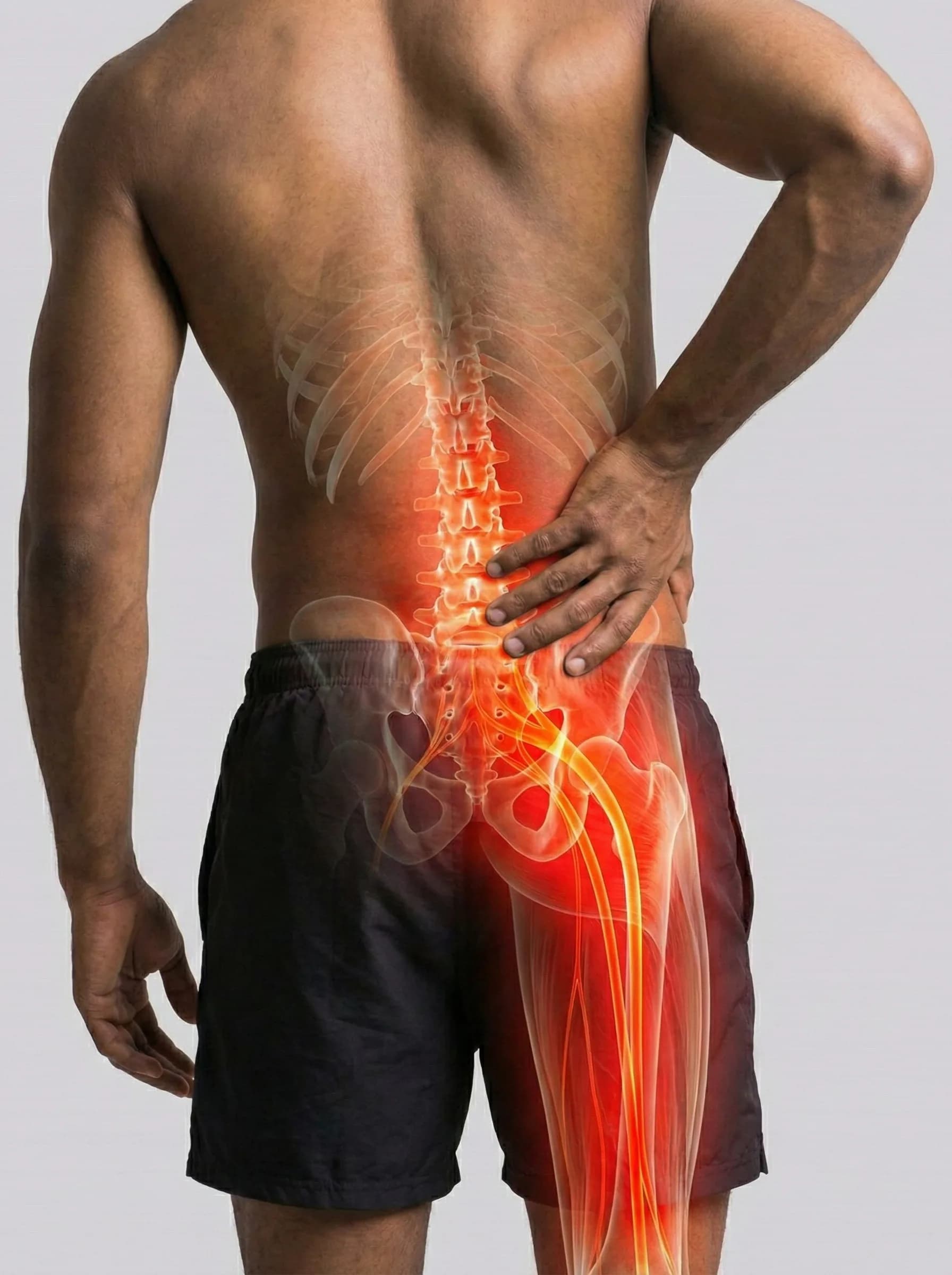
Spine and nerve pain care that checks strength, sensation, reflexes, walking, and scan findings before choosing rehab, injections, or surgery when clearly needed.
Do not wait for WhatsApp for foot drop, groin numbness, bladder/bowel change, fever, or rapidly worsening weakness.
Medically reviewed by Dr. Himanshu Gaur
Orthopedic Surgeon in South Delhi. Reviewed 13 Jun 2026. View credentials.
Focused patient guides
Spine guide
Back pain, sciatica, and red flags
Many stable spine pain patterns settle without surgery, but nerve signs and warning symptoms change the urgency. We check strength, sensation, reflexes, walking, and scan findings together.
Usually clinic review
Back pain without weakness
Stable pain may start with medicine, posture changes, and guided activity after nerve signs are checked.
Nerve irritation pattern
Pain travelling below knee or into arm
Sciatica or cervical nerve pain needs a focused nerve exam. MRI is useful when it changes the treatment plan.
Urgent care
Weakness, bladder/bowel change, fever, or fall
These are uncommon but important warning signs. Do not wait for routine OPD or WhatsApp guidance if they appear.
A small disc bulge on MRI is common. The key question is whether symptoms, examination, and imaging match.
Why choose us
Pinpointing the Pain Source
We map symptoms carefully to find whether pain is muscle, disc, or nerve driven.
Diagnosis-Led Spine Care
Rehab, posture, and pacing lead the plan when diagnosis and nerve signs show they are safe.
Surgery Only When It Fits
Surgery is discussed only when your symptoms, examination, function, and imaging point to a clear benefit.
Who is this spine page best for?
This page is useful if you have low back pain, neck pain, sciatica, slip disc symptoms, tingling in the arm or leg, pain after long sitting, or pain that worsens during office work, driving, or phone use.
It is also useful if you already have an MRI report and want to know whether it matches your symptoms. We do not decide treatment from the report alone; we match it with strength, sensation, reflexes, walking, and daily function.
What causes back and neck nerve pain?
Back or neck pain going into the arm or leg can scare you. Do not panic, but do not self-treat blindly either.
First we check where pain starts, what movement triggers it, and whether strength, sensation, reflexes, or walking are affected. If nerve signs are stable, non-surgical care may work well. If weakness is progressing, foot is dropping, or bladder/bowel symptoms appear, urgent review is needed.
What symptoms and causes are common in spine pain?
Symptom matcher
Match what you feel to the likely source.
Symptom
Pain shooting down leg?
+
Symptom
Pain shooting down leg?
Likely: Sciatica / Disc Issue
Symptom
Stiff neck & headache?
+
Symptom
Stiff neck & headache?
Likely: Tech Neck / Strain
Symptom
Arm tingling?
+
Symptom
Arm tingling?
Likely: Cervical Radiculopathy
Sitting at a desk in Nehru Place or Okhla?
We see "Tech Neck" daily. We don't just treat the pain; we adjust your workstation ergonomics and sitting habits to prevent recurrence.
Low back pain often stays local, while leg pain that travels below the knee (Sciatica) can feel burning or aching. Neck nerve pain can spread into the shoulder, arm, or hand (Cervical Radiculopathy). The exact location matters because it points to which nerve is irritated. Common causes are muscle strain and disc-related pain. Muscle strain is sore and tight, worse with certain movements, and often improves with rest and gentle mobility. Disc-related pain has a deeper ache and can flare with sitting or bending; if it touches a nerve, the pain travels. Pain intensity does not always equal nerve damage. Daily triggers like long desk hours, long commute in one position, heavy lifting, and phone posture can **flare pain**.
When should I seek urgent care?
Warning: Loss of bladder or bowel control, groin numbness, foot drop, or rapidly worsening weakness needs emergency care. Do not wait for WhatsApp or routine OPD.
Please do not wait for routine OPD or a WhatsApp reply if you develop foot drop, loss of bladder or bowel control, numbness around the groin, rapidly worsening weakness, fever with spine pain, or pain after a significant fall. These symptoms are uncommon, but they need urgent medical care.
For stable pain, tingling, or stiffness without these warning signs, a focused clinic review is the right next step.
How is spine pain assessed in clinic?
Truth vs Myth
Myth
MRI tells the whole story.
Truth
We treat the person, not the picture. Many concerning MRI findings do not match severe symptoms.
We do not treat the MRI paper. We treat you. First we listen. Then we check strength, sensation, reflexes, and movement with our hands. Scan only if it changes treatment, so the next step is based on your symptoms and function.
Can spine and nerve pain improve without surgery?
The Care Ladder (Conservative First)
Step 1 (Base)
Meds, Posture Correction & Rest.
Step 2
Targeted Physiotherapy & Core Rehab.
Step 3
Nerve Root Blocks / Injections.
Step 4 (Top)
Micro-Surgery (Only if needed).
Yes, in many stable cases pain settles without surgery. That decision comes after checking strength, sensation, reflexes, walking, warning signs, and imaging when needed. If the condition is stable, we may start with medicine, posture correction, and guided exercises you can actually do. If pain still blocks progress, a focused injection may help selected patients. Surgery is considered when symptoms, examination, and imaging point to a clear benefit, especially with progressive weakness or major functional limitation.
How do we decide between medicines, physio, injection, and surgery?
We first check whether the nerve is safe: power, sensation, reflexes, walking, and warning signs. If the nerve is stable, treatment may start with medicines, posture/activity changes, and physiotherapy matched to the diagnosis.
If pain blocks movement despite a proper plan, an injection may be discussed. If weakness is progressing, walking is affected, or MRI findings clearly match severe nerve compression, surgery is discussed instead of delaying with exercises alone.
When is spine surgery considered?
Surgery Decision Matrix
Surgery is usually considered for...
- Leg/Arm weakness (Foot drop)
- Unbearable nerve pain
- Loss of hand coordination
Surgery is usually not helpful for...
- General back stiffness
- MRI findings with no symptoms
- Pain that comes and goes
Do not fear the word surgery. It is needed only in selected cases. We consider it when weakness is increasing, foot is dropping, severe nerve pain continues despite proper non-surgical care, or the MRI clearly matches the symptoms and examination. Small MRI bulges alone are common. We see this daily. If strength is stable and function is improving, we continue non-surgical care.
What does recovery and pacing look like?
Activity Traffic Light
🔴 Stop (First 2 Weeks)
- Heavy lifting
- Bending forward
- Sitting > 20 mins
🟡 Caution (Weeks 2-6)
- Long drives
- Overhead reaching
🟢 Go (Safe Zones)
- Gentle walking
- Lying flat
- Gentle nerve glides
Progress is measured by function: longer sitting tolerance, steadier walking, fewer flare-ups, and better sleep. Many people notice changes over a few weeks, while others need several months to rebuild strength and confidence. A slow start can still be **good progress**. Recovery slows when activity is either too aggressive or too cautious. Skipping rehab, long static sitting, poor sleep, or ongoing stress can keep nerves irritable. We **pace activity** so you move forward without triggering repeated setbacks.
Confused by your MRI Report?
Don't treat the picture. Bring your MRI for a clinical review to see if the findings actually match your pain.
MRI review helps us plan your visit, but it does not replace examination. Foot drop, groin numbness, bladder or bowel change, or rapidly worsening weakness needs emergency care.
Book MRI ReviewFAQs
Is slip disc serious?
It sounds alarming, but most slip disc cases are disc bulges or herniations that irritate a nerve. The seriousness depends on your strength, sensation, and function, which we assess in clinic.
Do I need MRI?
Not always. The exam and, when needed, an X-ray answer many questions. MRI is used when symptoms persist, when weakness appears, or when imaging would change the plan.
Is walking good for spine pain?
Usually, yes in gentle doses. We match walking volume to your diagnosis and adjust if it flares leg or arm symptoms.
Will sciatica go away?
Sciatica often improves with a structured plan, but the pace varies. We focus on steady gains in walking, sitting, and sleep rather than a fixed deadline.
When is surgery needed?
Surgery is considered when nerve compression leads to progressive weakness or significant functional limits despite good non-surgical care.
Do injections fix the problem?
Injections can reduce pain and help rehab progress, but they are not a cure for every cause. We use them when they fit the diagnosis.
Get Answers for Your Pain Today
Book Your 30-Minute Slot.
Contact the clinic
Speak with our care team or request a callback when it suits you.


